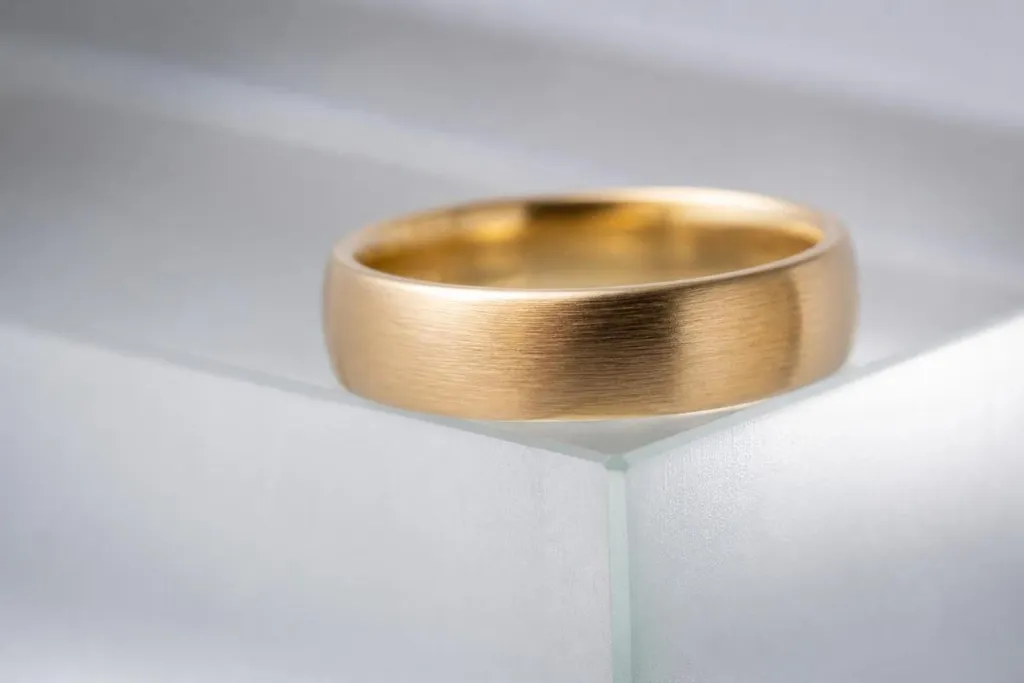
A wedding band does not need a mirror-like shine to feel refined. Satin finishes take a quieter approach, softening the way precious metal reflects light and giving the ring a smooth, understated character. For men who rarely wear jewellery or who prefer accessories that do not demand attention—this restrained surface treatment can make a wedding ring feel particularly natural on the hand.
For anyone considering timeless mens satin polish wedding band designs, the finish is only part of the decision. Width, profile, precious metal and the use of polished details can all change the final effect. A slim satin band may feel subtle and traditional, while a broader, flatter version can appear distinctly contemporary. The strongest choice balances that visual character with comfort and the realities of daily wear.
What Makes a Satin Finish Different?
A highly polished ring reflects its surroundings clearly, creating bright highlights as the hand moves. Satin finishing reduces that reflectivity, producing a softer surface with a more diffused response to light.
This gives plain precious metal additional texture without relying on engraving, gemstones or elaborate decoration. The result can be especially effective on men's wedding bands because it adds visual interest while preserving a clean silhouette.
Satin should not be confused with a completely rough or heavily brushed appearance. Depending on how the surface is finished, the effect can remain smooth and sophisticated, with just enough texture to distinguish it from conventional high polish.
Some designs also combine satin and polished surfaces. A satin centre with polished edges, for example, introduces contrast while keeping the ring restrained. The difference becomes most noticeable as light moves across the two finishes.
Width and Profile Shape the Overall Style
A satin surface looks different depending on how much metal is visible.
Narrower bands create a discreet line across the finger and can suit someone who wants the wedding ring to remain understated. Broader bands provide more surface area for the satin texture to be appreciated and often produce a stronger, more architectural appearance.
Finger proportions should influence the decision. A broad ring may sit naturally on a larger hand but feel restrictive on shorter fingers. Conversely, an extremely narrow band can appear less substantial than expected on a broad hand.
Profile matters just as much. Rounded bands soften the appearance of a satin finish and tend to feel more traditional. Flatter profiles create cleaner lines and allow the diffused surface to become a stronger design feature.
Comfort should be assessed alongside appearance. A softly curved interior can make a substantial ring easier to wear, particularly for someone who is not accustomed to having jewellery on their hands throughout the day.
Choose a Metal That Works With the Finish
Satin finishing changes how the colour of precious metal is perceived because the surface reflects less direct light.
On platinum, the effect can emphasise the metal's naturally cool, understated character. White gold creates a similarly contemporary palette, particularly when combined with a simple flat or gently rounded profile.
Yellow gold brings more warmth. Reducing the mirror-like shine can make a yellow gold wedding band feel less formal while retaining the unmistakable richness of the metal.
Rose gold offers a softer interpretation again, with its warm tone becoming the principal decorative feature of an otherwise minimal design.
Existing accessories can provide useful guidance. Someone who regularly wears a brushed steel watch may find a cool satin-finished wedding band particularly cohesive, while warm-toned jewellery may point naturally towards yellow or rose gold.
Understand How Satin Finishes Age
No wedding band worn every day remains exactly as it appeared when new. Satin surfaces gradually develop marks through contact with desks, tools, handles and other objects.
Interestingly, fine everyday scratches may initially be less visually obvious on a satin surface than on a mirror-polished ring. More pronounced marks can still disrupt the consistent finish, however.
Professional refinishing can restore the intended texture when required. It is usually better to have this done appropriately rather than repeatedly attempting abrasive home treatments that could alter the surface unevenly.
The ring should still be removed for heavy manual tasks or situations where it could be trapped or severely impacted. This protects both the band and the wearer.
Accurate sizing is equally important, particularly with wider designs, which can feel tighter because more of the finger is enclosed by metal.
Final Thought
Satin-finish men's wedding bands offer a considered alternative to traditional high polish. Their softer reflection makes precious metal feel restrained and contemporary without relying on decorative complexity.
Choose the finish alongside width, profile and metal rather than treating it as an isolated detail. When those elements are balanced around the wearer's hand and lifestyle, a satin wedding band can feel quietly distinctive on the wedding day and entirely comfortable in the years that follow.